
Amortization Financial Accounting
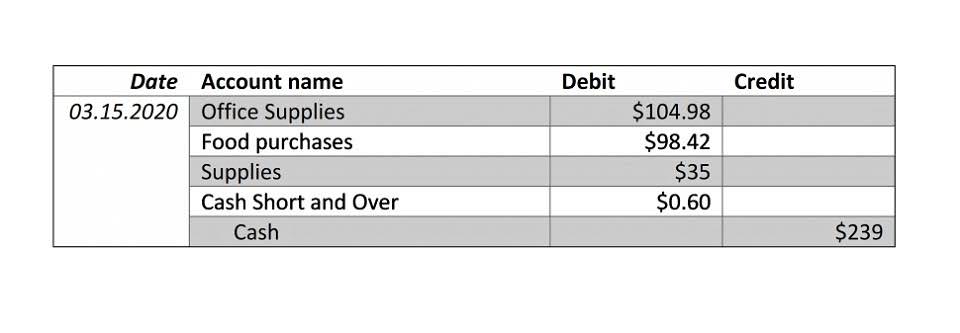
The term amortization is used in both accounting and lending with different definitions and uses. Both frameworks use the straight-line method but may differ in assessing useful life and impairment testing. GAAP allows some tax-related exceptions, while IFRS focuses on fair value adjustments. The effect of premium bond amortization on interest income recognition over time.

Common Depreciation Methods:
Amortization, however, involves intangible assets, such as patents, copyrights, and capitalized costs. Amortization can help small businesses manage large expenses by spreading out the cost over a period of time. Amortizing allows businesses to possess more income and assets on the balance sheet and entitles businesses to a tax deduction for as long as the asset is in use. There are typically two types of amortization in accounting — one for loans and one for intangible assets. We amortize a loan because loans become a kind of financial liability and are not tangible assets.
Understanding Income Statements
Depending on the payment method used, some payment periods can be quite high, causing cash flow issues within the business. The straight-line method is the equal dispersion of monetary instalments over each accounting period. Generally, this method is the go-to scheduling of payments for businesses. The straight-line method is the equal dispersion of monetary installments over each accounting period. If a company is going to amortise something, it will have an attached amortisation schedule.
Is It Better to Amortize or Depreciate an Asset?
It’s often neglected as it involves manual calculations and complicated formulas. Amortization of intangible assets is a process of spreading the acquisition cost of the intangible asset over its profitable usage time. It is hard to write in numerical terms the value of intangible assets, especially something like goodwill that doesn’t have a practical use. But there are ways to put a number to it, and your accountants must take that into consideration when filing the annual expense records.
- The cost of business assets can be expensed each year over the life of the asset to accurately reflect its use.
- With tools like Microsoft Excel or online calculators, creating customized amortization schedules is more accessible than ever.
- With amortization’s help, you will know how much you will incur in the future because of your loans and assets.
- GAAP does not allow for revaluing the value of an intangible asset (except for certain marketable securities), but IFRS does.
- GAAP allows some tax-related exceptions, while IFRS focuses on fair value adjustments.
This gradual reduction aligns with amortization refers to the allocation of the cost of assets to expense. the principle of conservatism in accounting, ensuring assets are not overstated. The amortization expense for each accounting period is determined by dividing the initial cost of the intangible asset by its estimated useful life. This results in a consistent yearly expense that reduces the asset’s book value on the balance sheet. In contrast to tangible assets that physically wear out, intangible assets lose value either because of the expiration of legal rights or by becoming technologically or commercially obsolete.
Tax Code Requirements
- Choosing the right depreciation method can impact a company’s profitability and asset valuation.
- Consistent application of amortization policies and clear disclosure in financial statements builds trust among investors and regulators.
- To record this in the journal, a debit entry is made to the amortization expense account, reflecting the portion of the asset’s value consumed over time.
- A software company amortizes a $1 million patent over 10 years, reporting a $100,000 amortization expense annually, impacting EBIT but not EBITDA.
- Since intangible assets typically lack a physical form and often have no residual value, their entire cost is usually amortized.
Depreciation and amortization have tax implications, allowing firms to reduce taxable income over time. Tax codes often allow accelerated methods (e.g., MACRS in the U.S.) to incentivize capital investment. If an intangible asset loses its value prematurely, it may require impairment recognition, which reduces its book value to reflect the current market condition. As premiums are gradually amortized, it affects how interest income from these bonds is recognized over time.
Can intangible assets have a residual value?
Amortization and depreciation are two main methods of calculating the value of these assets whether they’re company vehicles, goodwill, corporate headquarters, or patents. Accurately valuing long-term assets and liabilities is another critical benefit of amortization. It allows businesses to reflect these items’ gradual consumption or expiration on their balance sheets.
What is Accumulated Depreciation
- It’s structured so that you will pay the interest portion during the early duration and the principal part later.
- This process helps businesses align expenses with the revenues generated by these assets, providing a realistic view of profitability.
- This approach ensures that the expense is matched with the revenue generated from the copyrighted work, providing a more accurate reflection of the company’s financial health.
- There are typically two types of amortisation in accounting- for loans (including principal and interest payments) and intangible assets.
- The cost is divided into equal periodic payments or installments over months or years.
The concepts of amortization and capitalization address the treatment of expenditures related to assets over time. Amortisation is an accounting term used to describe the act of spreading the cost of a loan or the cost of an intangible asset over a specified period of time with incremental monthly payments. This accounting function is to help companies cover their operating costs over time, while still being able to utilise and make money from what they are paying off.

Pertinent factors that should be considered in estimating useful life include legal, regulatory, or contractual provisions that may limit the useful life. The method of amortization should be based upon the pattern in which the economic benefits are used up or consumed. If no pattern is apparent, How to Invoice as a Freelancer the straight-line method of amortization should be used by the reporting entity. At its core, amortization represents the structured repayment of a loan or the systematic allocation of the cost of an intangible asset over its useful life. In the context of loans, every payment reduces both the principal and accrued interest, leading to eventual debt elimination. Amortization expense is a key element in financial reporting, especially in managing and presenting intangible assets.

What is amortisation in simple terms?
However, under certain circumstances, changes may be allowed due to a reassessment of the asset’s useful life or other significant factors. This example will explore the process of amortization accounting for both a loan and an intangible asset, shedding light on the intricacies https://live-kibeyefa.pantheonsite.io/2023/05/12/product-costs-and-period-costs-definition/ of this accounting process. Amortization in accounting plays a crucial role, serving as a method to systematically allocate the cost of assets over their useful life. Bureau of Economic Analysis announced a change to the way it estimates gross domestic product (GDP). Going forward, it was going to include intangible assets in its calculations of investments in the economy. A well-structured amortization schedule can also help borrowers understand the implications of different payment scenarios.